
Breaking Barriers without Knowing It
Alumni | Athletics | Bell TowerMay 01, 2026
Fanny Wesley, center, with the current UAFS Cheer team.
Share on Social Media


Current News Stories
Written By: Tina Alvey Dale
Fanny Wesley broke barriers throughout her life.
She was the first Black cheerleader at Charleston High School. She became the first Black cheerleader at the University of Arkansas – Fort Smith (then Westark College) and the first Black woman on the homecoming court. She was the first black woman to work in the accounting department at ABF, and she and her husband, Robert, were the first black couple to build a home in the Canterbury Cove subdivision in Fort Smith.
She’s spent a lifetime being a catalyst in whatever community she calls home. Yet, she never set out to make history, and she rarely realized she was doing so at the time.
“I didn’t know that I was doing anything special or first. I didn’t know anything different,” Fanny said.
Franklin County Roots
Fanny grew up on a 200-acre farm in Charleston, the daughter of a farmer and coal miner. Her family had lived and farmed in the area for generations.
One of 10 children, Fanny was raised to respect education and others.
“I can’t say college was expected in my family. But I believe they wanted it for us. They always said, ‘Get as much education as you can and do the best you can.’ And another rule we had was treat people the way you want to be treated,” she said.
Her family was no stranger to progress.
The Charleston School Board unanimously voted in July 1954 to desegregate all 12 grades of its schools following the Brown v. Board of Education U.S. Supreme Court ruling, making it the first school district in the former Confederate states to integrate its schools. That fall, 11 Black students enrolled.
The first Black student to graduate from Charleston High School in 1961 was Barbara Williams (Dodson). She was Fanny’s older sister.
“We never met any prejudice or discrimination in Charleston. Everyone knew us. My family had been there for years,” Fanny said.
Firsts That Felt Ordinary
When Fanny started high school years later, nothing was thought of it, she said. Her senior year in high school, she was a cheerleader—the first Black cheerleader in Charleston.
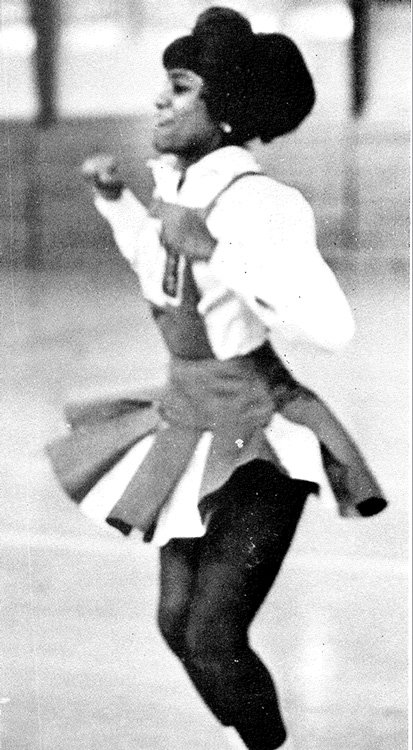 “I didn’t know there was anything different,” she said.
She graduated in 1970 and enrolled that fall at Westark College, now UAFS, studying general studies and accounting.
“I did have a love for cheerleading. So, I just thought I would try to pursue that and see if I could be a part of the team,” Fanny said.
She became the first Black cheerleader on the team, again. By her second year, she was named head cheerleader. That same year, she was selected for the homecoming court, making her the first Black member.
Work, Marriage and Making a Life
Fanny married the following year, stepping away from college to focus on work and family. She met Robert Wesley while both were students at Westark.
Both students also worked at Whirlpool Corp, starting when they were in school. Two years later, Fanny would move to ABF Corporation, where she would work for 45 years in the accounting department.
“I was the first person of color at the office. We have one office under ABF. My office was at Arkansas Best Corporation. They did not have any ladies of color there at the time,” she said.
Building a Future Together
Over the years, the couple raised two daughters, both of whom completed college degrees, and filled a life with all they wanted.
“That's what my parents and grandparents told me. People ask us, ‘How did you do it?’ I tell them, ‘Well, we just did,’” Robert said.
“We joined forces. We made a plan that we would work five years and then buy a home and get our vehicles and then have children. And the plan worked perfectly,” he added.
The couple was able to build a home in the Canterbury Cove community in 1988, becoming one of the first black couples in the subdivision, Fanny said.
Integrity as a Legacy
Along the way, the couple learned important lessons. Robert taught Fanny how the “country mouse” could adjust to life in the city. And she taught him to treat everyone with love, he said.
These are lessons the two worked to teach their children as well.
“My parents would always say, ‘Whatever you do, do the best you can.’ And they would
always specify, ‘Complete your job and do it right.’ You can’t just go off and leave
it halfway done. It's a part of integrity. Have that in whatever you do. Integrity
is that part of what you do when people are not watching,” Fanny said.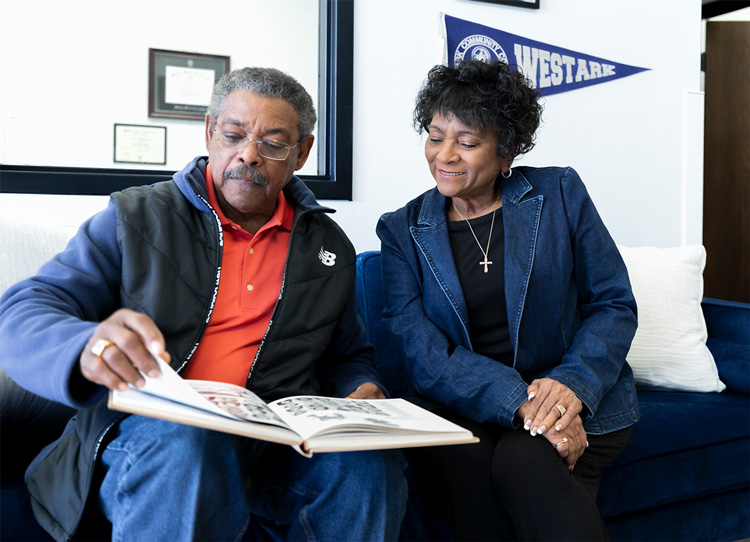
She passed those lessons on to her daughters: That if they worked hard, they could accomplish unimaginable things and serve as catalysts for change, just like their parents.
“I think that’s what we were—catalysts. We didn’t set out to be that, but we were opening doors,” Fanny said.
Media Relations
The UAFS Office of Communications fields all media inquiries for the university. Email Rachel.Putman@uafs.edu for more information.
Send%20an%20EmailRachel Rodemann Putman
- Director of Strategic Communications
- 479-788-7132
- rachel.putman@uafs.edu