
Steve Ruark Brings Unconventional Path, Manufacturing Perspective to Advisory Board
Business and Industry | Community | FeaturedSeptember 03, 2026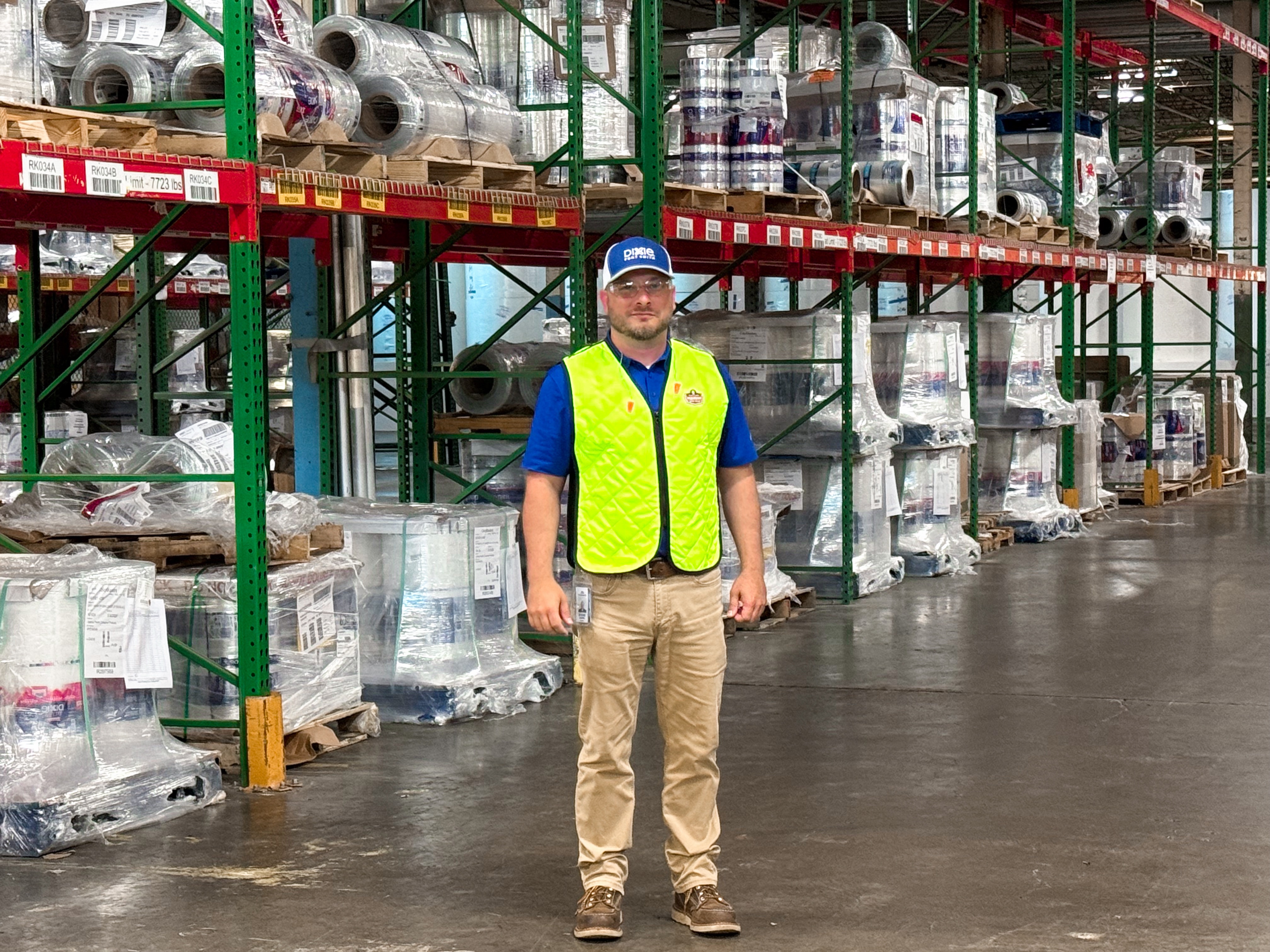
Steve Ruark’s career might have been more of bee trail than straight line, but that expertise is invaluable in his role on the University of Arkansas – Fort Smith’s Advanced Manufacturing Board of Advisors.
Share on Social Media


Current News Stories
Written By: Tina Alvey Dale
Steve Ruark’s career has not followed a straight line.
He started in manufacturing in 2005, working for an HVAC coil manufacturer in East Texas. From there, his career moved through manufacturing engineering, oil and gas, project and design engineering, and software engineering before bringing him to Fort Smith, where he now serves as Engineering and Technology Leader for Georgia-Pacific’s Dixie facility in Fort Smith.
“I was the squiggly line, like following a honeybee around,” he said. “But it was always manufacturing, manufacturing-adjacent in some kind of way.”
That unconventional path is part of what Ruark brings to his newest role as a member of the University of Arkansas – Fort Smith’s Advanced Manufacturing Board of Advisors.
Before joining the board, Ruark toured UAFS’ advanced manufacturing facilities and saw an opportunity to connect what students learn in the classroom with what they will encounter on a manufacturing floor. That connection is quite personal for him.
Ruark built his engineering career through industry experience rather than a traditional engineering-degree path. In 2014, he returned to school, earning a business degree and later an MBA from Western Governors University in 2019.
His experience taught him that education can open doors, especially for those whose careers don’t follow a traditional path.
“Opportunity a lot of times in bigger companies required me to have an education that was documented and not just assumed,” he said.
Experience also shaped what he looks for in education today, including flexibility, practical application, and preparation for the realities of the workplace.
Ruark sees an opportunity for UAFS to help close the distance between knowing the theory and knowing how to apply it, something he has encountered throughout his career.
“Engineers in a manufacturing company, they will make or break your company, full stop,” he said.
The most effective engineers are technically competent and understand the business implications of their decisions, he said.
An engineer who understands the technology but lacks business acumen can design something that is technically sound but too expensive or complicated to build. An engineer who understands both can become a critical partner in moving a business forward, he said.
“That’s, to me, the opportunity here, helping bring up maybe the reality of how the engineering application impacts businesses,” Ruark said.
This fits closely with what he sees developing at UAFS, particularly through the university’s advanced manufacturing program.
Ruark was impressed by the program’s focus on automation, Industry 4.0 technologies, and hands-on problem-solving. Students work with programmable logic controllers, robotic arms, and other equipment like what they will encounter in industry.
The result is an opportunity for students to graduate with more than theoretical knowledge, he said.
“They’re seeing the exact same type of equipment,” he said. “That degree program is really focused on problem-solving, problem-solving modernization.”
For Ruark, that practical preparation is essential to building the next generation of manufacturing talent.
He also wants to help change the way engineers view their relationship with the people who operate the equipment they design and maintain.
Throughout his career, Ruark has seen the traditional divide between engineering and the shop floor. He wants to break it down.
“The old rift between the ‘smart people’ who sit in engineering and the shop floor is something I want to break down,” he said.
Instead of assuming an operator is the problem when something goes wrong, Ruark believes engineers should first ask what they have done to set that person up for success.
That mindset reflects a broader philosophy that guides Ruark’s leadership at Georgia-Pacific. For both the man and the company, people, values, and knowledge matter as much as technical skill.
The company operates under Koch Industries’ Principle-Based Management system, which emphasizes values such as integrity, humility, and creating value rather than simply following rules.
“For me, it’s integrity. It’s doing things in front of people and behind closed doors that are exactly the same,” he said.
That philosophy also informs his approach to mentoring. One of Ruark’s passions is helping younger and early-career professionals find meaning and purpose in their work.
His own career has given him a broad perspective, allowing him to connect ideas across industries and disciplines. He describes himself as a “conduit,” someone who can bring together knowledge and experiences that might not otherwise intersect.
Now, at 42, Ruark sees his involvement with UAFS as part of a transition from building his own career to helping build others’ careers.
“I feel like I’m starting to turn the corner on giving back,” he said. “Not so much trying to get to a certain point.”
That makes the advisory board more than another professional responsibility.
Ruark sees it as a chance to help shape programs that can strengthen the regional manufacturing workforce while creating opportunities for students to connect with companies like Georgia-Pacific through internships, co-ops, and careers.
He also sees an opportunity to help UAFS graduates become engineers who can bring technical expertise to a problem while understanding the people, costs, and business realities surrounding it.
That, ultimately, is what Ruark hopes to contribute to the university. He does not want to simply advise about manufacturing. He wants to share perspective about what it takes to turn knowledge into value.
“I want to turn engineers into business partners, preferred business partners,” he said.