
Early Childhood Education for Employers
Employers across Arkansas face a growing workforce challenge: many employees struggle to find reliable childcare. When childcare is unavailable or unaffordable, businesses experience higher turnover, increased absenteeism, and difficulty filling positions. Early childhood education and childcare access are increasingly recognized as workforce development issues. This page explains how childcare affects the labor market, why it matters to employers, and how businesses can support working families while strengthening the regional workforce.
The Economic Impact of Childcare
Childcare challenges affect more than individual families. They also have measurable economic consequences.
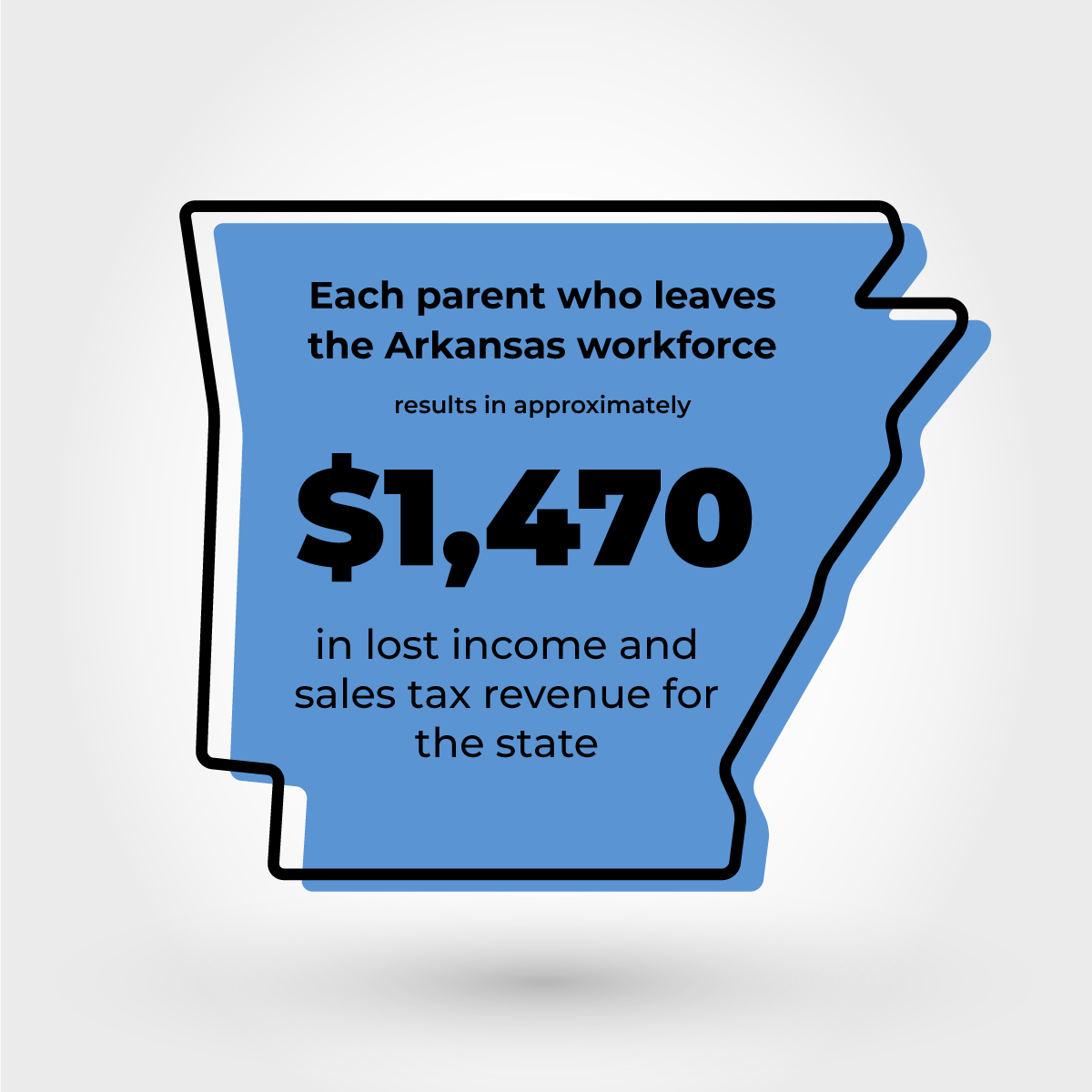
The U.S. Chamber of Commerce Foundation estimates that each parent who leaves the Arkansas workforce results in approximately $1,470 in lost income and sales tax revenue for the state.
When parents cannot remain in the workforce due to childcare challenges, businesses lose valuable employees, communities lose economic activity, and local economies experience reduced growth.
Source: U.S. Chamber of Commerce Foundation, Untapped Potential in Arkansas.
The Business Case for Early Childhood Education
Early childhood education supports more than children and families. It also plays
an important role in workforce development and economic growth.
When employees have access to dependable childcare, businesses often experience:
- Improved employee retention
- Reduced absenteeism
- Increased workforce participation
- Greater productivity and stability
Communities that invest in strong early childhood education systems help create environments where both families and businesses can thrive.
Early Childhood Education and the Future Workforce
Access to reliable, affordable childcare is closely tied to workforce participation. When families cannot find or afford childcare, many parents reduce their work hours, decline job opportunities, or leave the workforce entirely. These challenges affect employers across industries by reducing the available labor pool and increasing turnover and absenteeism.
Research shows the scale of this issue in Arkansas. According to a report from the U.S. Chamber of Commerce Foundation, 34 percent of Arkansans say they or someone in their household has left a job, not taken a job, or significantly changed employment due to childcare challenges in the past year. Many parents face these decisions when their children are very young, often during the years when childcare needs are highest.
Childcare access is not only a family issue. It is increasingly recognized as a workforce and economic issue. When parents cannot reliably participate in the labor force, businesses face staffing shortages, increased recruitment costs, and reduced productivity.
High-quality early childhood education also contributes to the long-term strength of the workforce. Early learning programs help children develop the foundational skills that support future academic achievement, social development, and long-term career readiness. Over time, investments in early childhood education strengthen the talent pipeline that employers depend on.
For employers and communities, improving access to childcare and early learning opportunities supports both today’s workforce participation and tomorrow’s workforce development.
Source: U.S. Chamber of Commerce Foundation, Untapped Potential in Arkansas.

How Employers Can Support Working Families
Employers play an important role in strengthening early childhood education systems and supporting working families.
Businesses do not need to solve the entire childcare system alone. Even small steps can make a meaningful difference.
Employers may consider strategies such as:
- offering flexible scheduling when possible
- sharing information about childcare resources with employees
- supporting family-friendly workplace policies
- partnering with community organizations focused on early childhood education
- exploring employer-supported childcare benefits or partnerships
These efforts can help employees balance work and family responsibilities while supporting a more stable workforce.
Community Partnerships and Local Leadership
The University of Arkansas – Fort Smith serves as the Local Lead for early childhood education in Sebastian and Scott counties through the Arkansas Department of Education Office of Early Childhood.
In this role, UAFS works with families, early childhood providers, employers, and community partners to strengthen local early childhood education systems and improve access to quality childcare.
Employers are an important part of this effort. Collaboration between businesses, educators, and community organizations helps strengthen the workforce and support working families across the region.
Get Involved
Employers play an important role in strengthening early childhood education and supporting working families. Businesses that engage in early learning initiatives can help improve workforce participation, support employees, and strengthen the regional economy.
Review the Research
Explore reports that examine the economic and workforce impact of childcare availability in Arkansas.
View U.S. Chamber of Commerce, Untapped Potential in Arkansas
View KinderCare Learning Companies and The Harris Poll, Gen Z Workforce Study
Explore Childcare Availability
View the Arkansas list of licensed childcare providers to better understand childcare availability across the state.
Connect with UAFS
UAFS serves as the Local Lead for early childhood education in Sebastian and Scott counties. Employers interested in learning more or collaborating on workforce initiatives can connect with our team.