
Detailed Planning and Coordinated Effort Needed for Commencement Ceremonies
Community | Featured | News | StudentsMay 01, 2026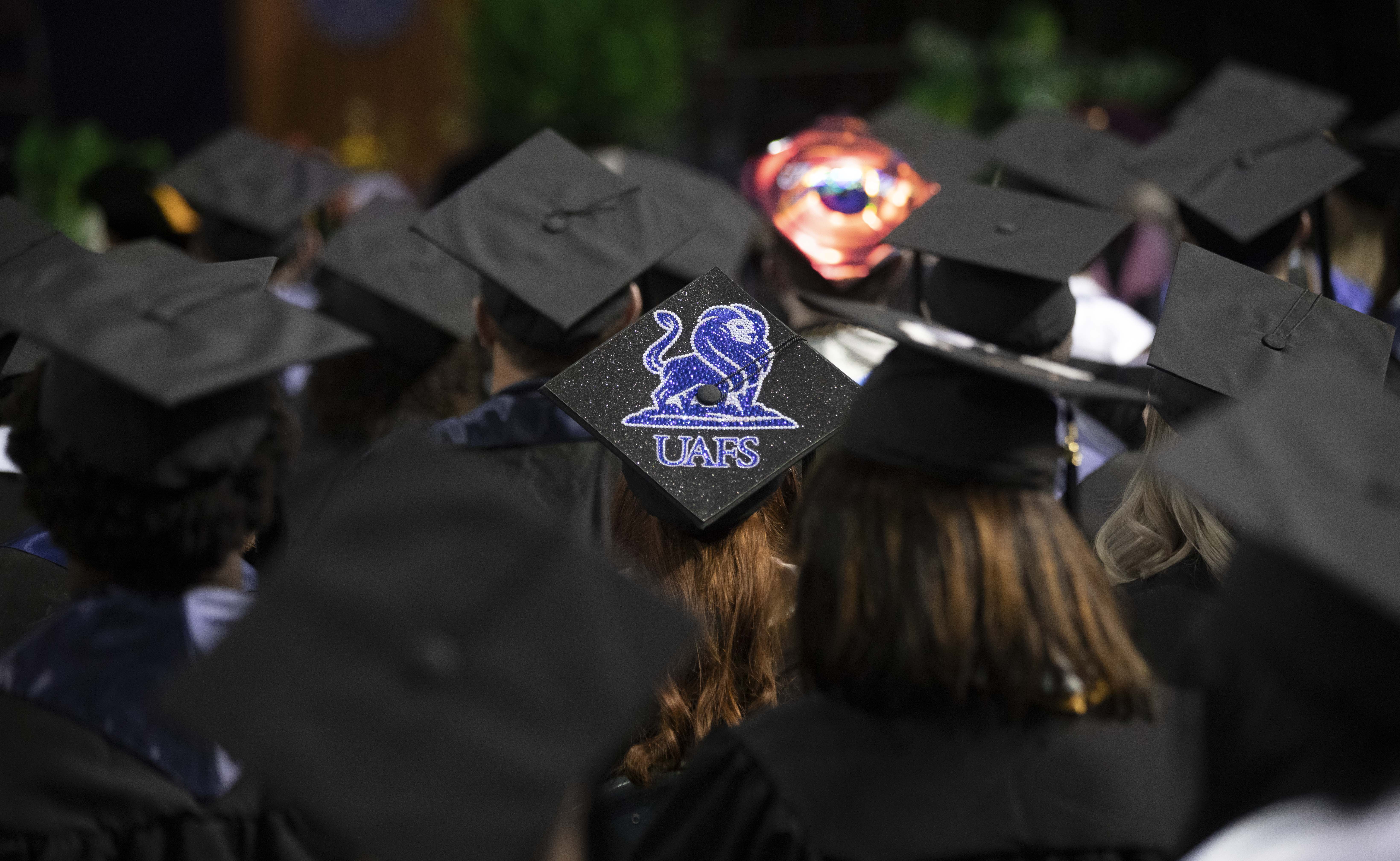
Months of planning, dozens of staff members, and a coordinated effort are all. necessary in making a successful UAFS graduation.
Share on Social Media


Current News Stories
Written By: Tina Alvey Dale
Behind the scenes of each University of Arkansas – Fort Smith commencement ceremony are months of planning, dozens of staff members, and a coordinated effort that begins just a few weeks into the semester, according to Registrar Wayne Womack.
UAFS typically hosts multiple ceremonies during the spring, each requiring a full arena setup, staffing teams and logistical coordination to move hundreds of graduates, faculty and guests through the event. While the ceremony itself lasts a few hours, Womack said preparation starts early and involves several campus departments.
“We start planning usually within two or three weeks of the start of the semester,” Womack said. “That includes communicating with students who have applied to graduate and getting everything in place for the ceremony.”
Stubblefield Center stands at the center of the operation, and that requires full transformation from an athletic facility to a formal commencement venue. Facilities crews install flooring to cover the arena surface, assemble a large platform and arrange seating for graduates and faculty. Draping and backdrops are also added to frame the platform where university leadership and speakers sit.
“There’s a setup with the facility,” Womack said. “You set up the chairs, the floor seating for the faculty and graduates, the platform. There are tiles that go down to cover the arena floor, and drapes for the backdrop.”
Spring commencement Saturday, May 16, will begin with a ceremony at 10 a.m. to honor 206 graduates from the College of Health, Education, and Human Sciences. At 1 p.m., the university will celebrate 209 graduates from the College of Arts and Sciences. The day will conclude with the 4 p.m. ceremony recognizing 234 graduates from the College of Business and Industry.
Three separate events require quick turnarounds to reset the space. Facilities staff handle cleaning before and between ceremonies.
“They’ve got to clean up and make sure everything looks good between ceremonies,” Womack said.
Outside the arena, the University Police Department manages traffic flow and parking for large crowds. Though the university does not track attendance for guests, Womack said the venue typically fills for each ceremony.
Inside, multiple teams coordinate the movement of participants. One group organizes graduates and faculty before the ceremony, guiding them into the arena and to their seats. Another team works on the arena floor, directing graduates as they approach the stage, receive recognition, and return to their seats.
Each ceremony requires about five to six staff members on the floor team and about 10 for lineup and staging, Womack said. Associate Registrar Sherry Burnett oversees the floor team, and Associate Registrar Da-Neya Price leads the lineup group.
The university also relies on academic advisors to assist during ceremonies, often matching them with graduates from their respective colleges.
“They’ve been working with those graduates for two, three, four years or more,” Womack said. “So, it makes sense to have them there for that moment.”
From the processional to the recessional, every movement is planned to ensure the ceremony runs smoothly. Womack said the scale of the event requires coordination across departments but follows a consistent structure each semester.
“That’s the basic of it,” he said. “It takes a lot of people working together to make it happen.”