
Chromatography Technology Coming to UAFS Thanks to INBRE Grant
Arts and Sciences | News | ResearchDecember 01, 2025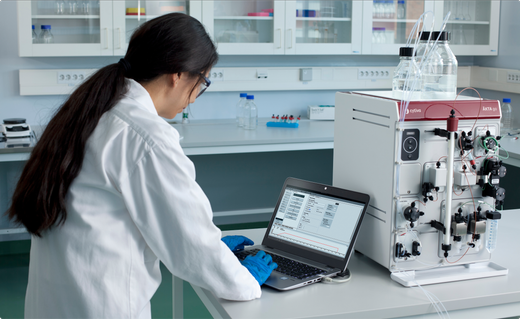
Share on Social Media


Current News Stories
Written By: Rachel Putman
A grant of more than $44,000 will bring advanced chromatography technology to the University of Arkansas–Fort Smith, opening new hands-on research and training opportunities for hundreds of students and helping prepare the region’s growing bioscience workforce.
The Competitive Shared Instrumentation Award, funded through Arkansas INBRE (IDeA Network of Biomedical Research Excellence), will provide $44,031 toward the purchase of an ÄKTA go liquid chromatography system for use in teaching and research. UAFS will contribute an additional $9,214.15 from the College of Arts and Sciences to cover taxes and associated fees for the instrument.
The shared system will be housed in the Math-Science Building and used collaboratively by faculty in biology and physical science. More than 500 students annually are expected to work with the instrument through biology, chemistry, biochemistry, and molecular biology courses, along with faculty-mentored undergraduate research.
“University of Arkansas–Fort Smith is deeply committed to providing students with transformational educational experiences that prepare them for careers and advanced studies in the biomedical sciences,” Chancellor Terisa Riley said. “This equipment represents a step forward in fulfilling that mission and advancing our strategic goals for research and undergraduate education.”
Chromatography is a core technique in the life sciences, used to separate and analyze biomolecules. The ÄKTA go system will allow faculty and students to purify proteins, analyze protein complexes, and study how molecules assemble and interact. The system supports a range of methods, including affinity, ion-exchange, and size-exclusion chromatography, and features a research-grade, computer-controlled setup similar to what students will encounter in graduate programs and industry labs.
UAFS will integrate the new instrument into a wide span of courses, including Biology, Biochemistry, Biophysical Chemistry, Analytical Chemistry, Molecular Biology, and Medicinal Chemistry.
“We are grateful for the opportunity to participate in opportunities created by Arkansas INBRE,” said Dr. Toni Alexander, dean of the College of Arts and Sciences. “We have seen how strategic investments made in our biomedical research infrastructure have benefited our faculty and students. We know that continued investments will have a ripple effect for biomedical research excellence in the River Valley.”
The project is led by Dr. Rahul Yadav, assistant professor of chemistry, who serves as project director and principal investigator. Co-investigators are Dr. Jeremy Durchman, associate professor of chemistry; Dr. Archana Mishra, associate professor of chemistry; Dr. Sandhya Baviskar, professor of biology; Dr. Jason Ortega, assistant professor of biology; and Dr. Christopher Pierret, professor of biology and head of the biology department.
Together, the team plans to use the instrument to expand undergraduate research, with planned projects including:
- Virus–host interactions: Dr. Yadav and his students will purify viral and human proteins to study how respiratory syncytial virus (RSV) may hijack the host cell’s internal framework, work that could generate preliminary data for future external grant applications related to infectious disease.
- Cancer-related enzymes: Dr. Yadav also plans to purify and characterize P450 enzyme CYP4Z1, an enzyme overexpressed in some breast cancers, as a potential biomarker and therapeutic target, giving student invaluable development as researchers.
- Protein secretion and mitochondrial function: Dr. Durchman will guide students in purifying proteins such as fibroblast growth factor 1 (FGF1) and cytochrome c, giving them experience in recombinant protein production and purification while exploring questions related to tumor biology, inflammation and wound healing.
- Drug delivery systems: Dr. Mishra will use the system to study micelles and vesicles, tiny surfactant-based nanoparticles that can carry drugs or pesticides, helping students examine how these delivery systems encapsulate and release kinetics.
- Emerging parasites and wildlife health: Dr. Ortega and his students will purify proteins from Raillietiella orientalis, an emerging, invasive lung parasite of snakes, to better understand how the parasite interacts with and potentially suppresses host immune responses.
- Environmental health and toxicology: Dr. Pierret plans to pair chromatography with zebrafish models to analyze contaminants in regional waterways, building on previous work that examined pollutants in heavily impacted canals and expanding local environmental health research.
"The ÄKTA go™ chromatography system, supported by the INBRE Shared Equipment Award, will significantly enhance my teaching and biochemistry/biomedical research, as obtaining purified biological macromolecules is an essential step in understanding their role in both healthy and diseased states.” Said Dr. Yadav. “It is also a much-needed addition to UAFS Biology, Biochemistry, and Chemistry instrumentation, supporting UAFS’s efforts to boost undergraduate research by providing hands-on experience and developing skills on industry-standard equipment that prepares students for the modern workforce.”
Arkansas INBRE, supported by the National Institutes of Health, is one of 24 state-level IDeA Network of Biomedical Research Excellence programs nationwide that work to strengthen biomedical education, research and career pathways. As a network institution, UAFS benefits from INBRE’s funding programs, training initiatives and collaborative opportunities for both faculty and students.
The ÄKTA go chromatography system will be installed in a secure teaching and research lab in the Math-Science Building. A laboratory manager in physical sciences will oversee maintenance, coordinate training for students and faculty, and manage a shared scheduling system to balance course and research needs. Standard operating procedures will guide daily use, care and troubleshooting to ensure the equipment remains reliable for years to come.
Media Relations
The UAFS Office of Communications fields all media inquiries for the university. Email Rachel.Putman@uafs.edu for more information.
Send%20an%20EmailRachel Rodemann Putman
- Director of Strategic Communications
- 479-788-7132
- rachel.putman@uafs.edu